
Concrete Sidewalk Building in Orange TX - a walk built on firm, even ground
Is your walk cracked, sinking or holding water? We rebuild it on firm, packed ground so it sits flat and drains away from the house.
- Service
- Concrete sidewalk building
- Call
- (409) 216-5078
How can you tell your sidewalk needs replacing?
Slabs that sink or tip
One section sits lower than the next, or the whole walk leans toward the yard. That usually means the dirt underneath settled or washed out because it was never packed, and the trip edge gets a little taller every wet season.
Puddles that sit for hours
After a rain, water stays on the walk or runs back toward the house instead of off into the yard. The slab has usually settled into a dip or was poured with the wrong fall, and standing water keeps softening the ground holding it up.
Cracks that keep growing
Cracks wander across the slabs in no pattern, then widen and start chipping at the edges. Usually the joints were cut late or skipped, or the ground moved, and once water and roots find the gaps the pieces loosen faster.
What does it take to build a new concrete sidewalk in Orange?
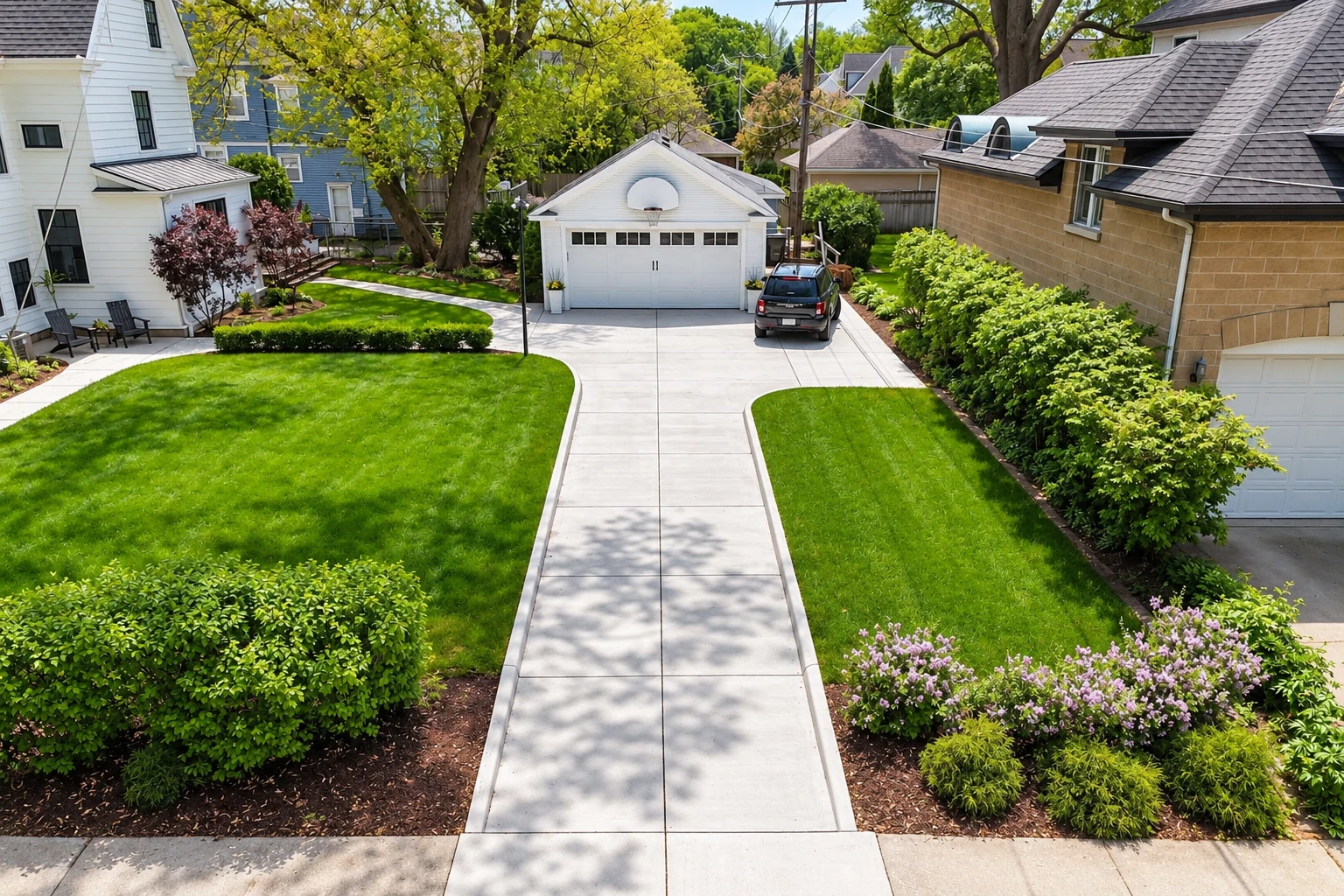
Concrete sidewalk building in Orange, TX means breaking out the old walk if there is one, digging down to firm ground, packing an even base and pouring a new concrete path over it. It's flatwork, the same kind of flat, open-air slab as a patio or driveway, and done right it gives you a walk that sits even and sheds water.
Most people call because the old walk has turned into something they step around, or because a new driveway or addition needs a path tied into it. The price mostly comes down to the length and width, how much old concrete has to come out, how much digging and fill the ground needs, how easy it is to get equipment in and the finish you pick. The schedule turns on the weather for pour day and on getting the permit side settled, which we handle with the right office when the job calls for one. If the budget's tight, I'll tell you to keep the plain finish and spend on the base, because nobody sees the base on day one, it's the first thing people want to cut, and it's what decides whether the walk stays put. Your written estimate spells out what's in it and what isn't, so you can see where the money goes.
Details to note before an estimate
- Rough length and width of the walk
- Where it runs on the property
- Old concrete or pavers to remove
- Low spots where water sits after rain
How we build a concrete sidewalk
A walk is only as good as the ground carrying it, so most of our effort goes in before the concrete truck shows up. Our crew breaks out and hauls off the old walk, digs past the soft dirt and roots, and packs the subgrade, the ground the slab sits on, until it's firm and even from end to end. We check where the water runs, set the forms so the walk falls away from your house, and set the pour time by that day's conditions so the surface doesn't dry out ahead of the finishers. Once it's placed, they float it smooth, cut control joints at the right time, which are straight grooves that give the slab a planned spot to crack instead of one it picks itself, and lay on a broom finish, a light ridged texture that keeps the walk from getting slick when it's wet.
A sidewalk usually connects to something. If it runs up to a garage whose floor is cracked or sitting low, we can look at garage floor concrete while we're there, since the same ground questions apply inside. And if you'd rather the walk not be plain gray, decorative concrete like color or a patterned border is easier to plan now than to add later.
Other work people pair with a new sidewalk
Garage floor concrete
When the slab inside your garage is cracked, stained or sitting low, a new floor on packed ground gives your walk a clean place to land.
Decorative concrete
Color, borders or a pattern turn a basic gray path into part of the yard's look, and it's best decided before anything gets poured.
What happens after you call about a sidewalk in Orange?
Call or send the form
Call (409) 216-5078 or use the form below and tell us roughly where the walk goes. We set a time for me to come out and see it.
I measure and write it up
I measure the walk, ask what it's for and look at what's sitting under the old one, then write an estimate that spells out what's included and what isn't. We also find out which office your address falls under before any forms go up.
Our crew preps and pours
Our crew lead runs the job and our finishers do the digging, packing, forming, pouring and finishing. Inside Orange, the city's inspectors check construction against city codes and the approved plans, and our crew works within the city's noise ordinance like every contractor there.
We walk the job together
When it's done, I walk the new sidewalk with you and show you the joints and where the water runs off. If something doesn't look right, that's the time to tell me.
Questions about building a concrete sidewalk
How much does a concrete sidewalk cost in Orange TX?
Across the US, installing a concrete sidewalk usually costs about $12 to $14.50 per square foot. That's a national figure for the work, not our price, so treat it as a rough yardstick. Your own number comes from the written estimate after I've measured and seen how much ground work your walk needs.
Do I need a permit to build a sidewalk in Orange, Texas?
Plan on one, because the City of Orange says all contractors must get permits before work begins, and it takes applications in person or by mail. If the walk reaches into county right of way, the Orange County Road & Bridge Department issues the permit for that part. We're licensed and fully insured, and since we work on both sides of the state line, from Beaumont and Port Arthur over to Lake Charles and Sulphur, we deal with whichever office your address falls under.
What is the best time of day to pour a concrete sidewalk?
The best time is whatever part of the day or night has the easiest weather for fresh concrete, and hot-weather conditions can show up here in any season. High heat, low humidity and wind, alone or together, pull water out of the mix and change how it has to be mixed, hauled and placed. That's why we settle the pour time by what that day actually looks like.
What causes cracks in a brand new concrete sidewalk?
Early surface cracks usually come from the top drying faster than water inside can rise to replace it, and flatwork poured in hot weather gets them most. Hot-weather guidance also calls for dampening the ground before the pour, with no puddles left standing. Cracks that show up later in odd places usually trace back to joints cut late or ground that moved.
How do I make sure a new sidewalk won't sink?
Start with the ground, because research on concrete pavement says you can't overstate how much even, consistent support underneath matters for concrete that lasts. A slab over a soft spot or loose fill bridges it for a while, then drops or breaks right there. Ask any contractor what they'll do under the walk before they talk about the finish, and if the answer is a rake and a level, keep looking.
Can you pour a new sidewalk over my old cracked one?
Usually not, because whatever cracked or sank the old walk is still down there and will work its way through the new layer. Pouring on top also raises the walk, which can leave a lip at your steps or door. We break the old one out so we can see the ground and fix it before anything new goes down.
Get a written estimate for your new sidewalk
Send the form and we'll get back to you within one business day to set a time for me to come out. The estimate is free, done on site and comes with no obligation, and you'll have what's included in writing. Satisfaction guaranteed on every job.
Explore our services and areas
Services
- Concrete driveway building
- Concrete patio construction
- Stamped concrete services
- Garage floor concrete
- Decorative concrete
- Concrete retaining walls
- Concrete floor installation
- Concrete pool decks
- Concrete steps construction
- Slab foundation building
- Foundation installation
- Concrete parking lot building
- Concrete footings
- Foundation raising
- Concrete cutting
Line up an estimate for your sidewalk
Call (409) 216-5078 with the walk's rough length and width, where it runs and a few photos, and I'll come out already knowing what to look for.