
Concrete Patio Construction in Orange TX - a slab on packed ground that sheds rain
Tired of a muddy back yard or a cracked old slab that holds water? We build patios on packed ground, sloped to drain.
- Service
- Concrete patio construction
- Call
- (409) 216-5078
Is it time for a new patio?
Cracks that keep widening
Cracks that started thin now catch a shoe or let grass through. That usually means the ground underneath has moved, and the longer you wait, the more water gets in and loosens the pieces.
One edge sitting lower
A corner or edge has dropped below the rest and left a lip you can trip on. Usually the dirt under it was never packed, and it tends to keep sinking once it starts.
Water headed for the house
After a storm, water sits across most of the patio or runs toward the back door instead of off the edge. That usually means the slab has lost its fall, and every rain pushes more water against your foundation.
What goes into a new concrete patio in Orange?
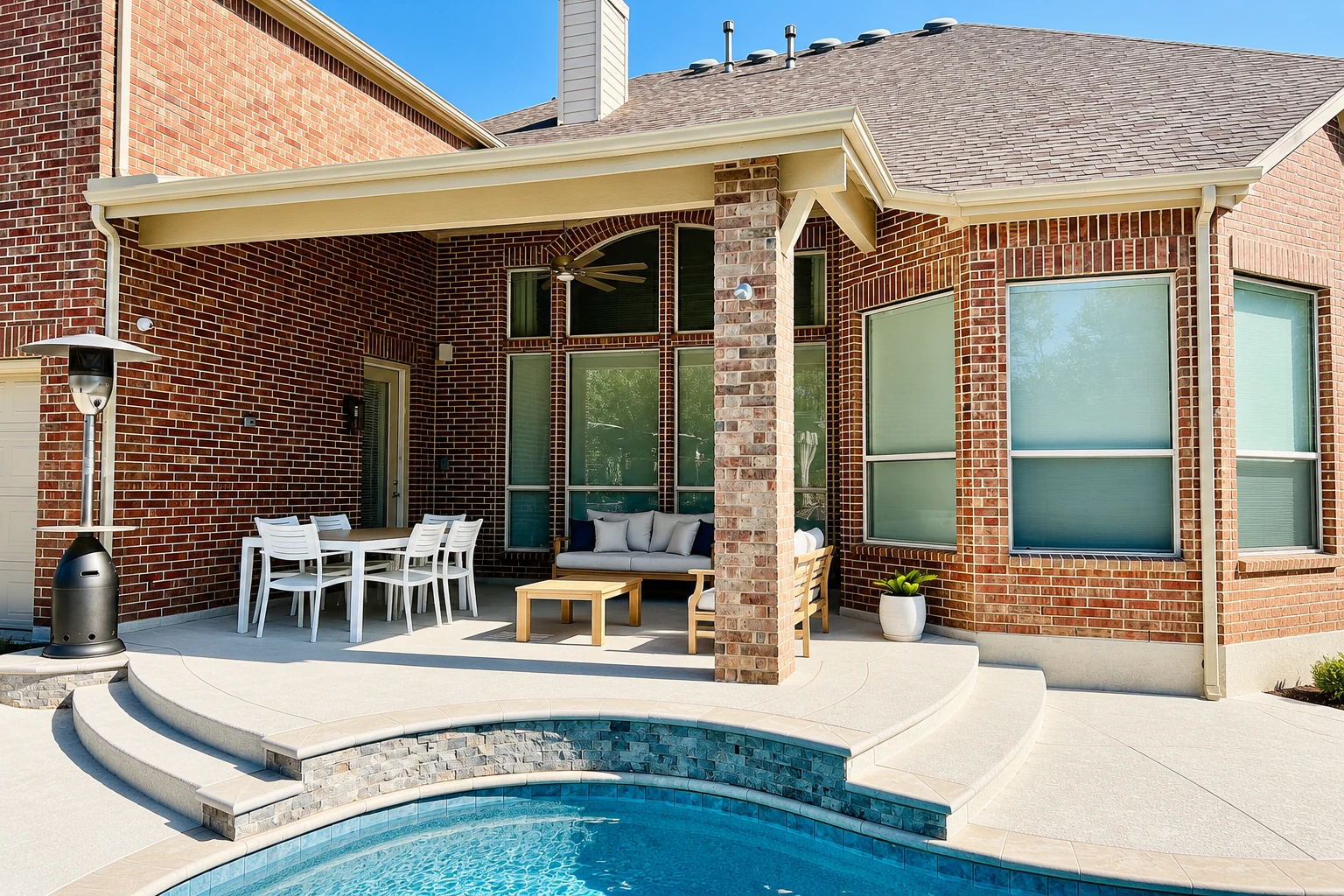
Concrete patio construction in Orange, TX means preparing a well-packed base, then pouring and finishing a slab that slopes just enough for rain to run off. At Orange Concrete Company we do the ground work first, because that's the part that decides whether your patio stays flat and dry.
Most people who call us have a bare spot that turns to mud, or an old slab by the back door that's cracked and holding water. The price mostly moves with the size, how much dirt has to come out before we can build a base, whether you want a plain or stamped finish and whether the slab gets reinforcement. The schedule turns on the weather and on any paperwork the city wants first. I measure on site and put what's included in writing, so you get a number for your yard instead of a guess.
Details to note before an estimate
- Rough size of the patio area
- Any old slab to tear out
- Plain or stamped finish
- Whether your lot is in a flood zone
How we handle concrete patio construction
We start below the slab, because a patio holds up on its base and its fall. Our crew digs out the grass and soft dirt, then packs the subgrade, the ground the slab sits on, so it's firm and far less likely to settle and take the concrete with it. I check where your yard's water runs before we set forms, and we set them so the slab falls slightly away from the house and sheds rain. We'll talk through whether yours needs mesh, rebar or nothing extra, and we pick a pour time that gives the concrete a fair start. Our finishers give it a broom finish, a light brushed texture that keeps it from getting slick when it's wet, and cut control joints, shallow grooves that give the slab a straight place to crack instead of a random one. If the budget's tight, I'd put the money into the base and keep the finish simple, because you see the finish on day one but you live with the base for as long as the patio lasts. We're licensed and fully insured. Satisfaction guaranteed on every job.
A patio often ties into other work. If you'd like a pattern pressed into the surface, our stamped concrete services go right on the patio itself, and a concrete sidewalk from the driveway or the back door gives you a dry path out to it. We're based in Orange and do this work in the cities around it on both sides of the state line, from Beaumont and Port Arthur over to Lake Charles and Sulphur.
Work that often goes with a new patio
Stamped concrete services
Pick stamping if you want your patio to look like stone, brick or slate, since the pattern goes in while the concrete is still fresh.
Concrete sidewalk building
Add a walk when people cut across the grass to reach your patio, so the path stays dry and the lawn doesn't wear into a track.
What happens after you call about your patio?
Call and book a visit
You call or send the form, and I come out to look at the spot, measure it and ask what the patio's for and what's sitting under it. Tell me anything you've noticed, like where water stands after a storm.
Get the estimate in writing
You get a written estimate that spells out what's in it and what isn't, so you can compare it line by line with anyone else's. We also find out which office your address falls under before any forms go up.
Prep, pour and finish
Our crew lead runs the job on site while the crew preps the ground, sets forms and pours. Our finishers handle the surface and cut the joints.
Walk the finished patio together
I walk the finished patio with you and point out the joints and the fall so you know what you're looking at. Ask about anything you see while we're standing there.
Questions before you build a concrete patio
How much does a concrete patio cost per square foot in Orange, TX?
In nearby Beaumont, a poured concrete patio usually costs about $6 to $12 per square foot, and that's the going rate in the area, not our price. A stamped patio costs more per square foot than a plain one, and reinforced concrete costs more than concrete without it. I'll measure your patio and put our price in writing at the estimate.
Does a concrete patio in Orange, TX need a permit?
Check with the city before you pour, because the city's building permit application lists concrete on its checklist. The Planning and Community Development Department takes those forms, including by email at permits@orangetexas.gov, and the form says all work in a special flood hazard area needs an elevation certificate, so plan for that step if your lot sits in one. Orange County notes that the national flood insurance program counts paving, filling and grading as development a community has to permit, so ask the city department which office handles your lot. We find out which office covers your address and handle the permit side when the job calls for one.
Do I need wire mesh, rebar or fibers in a concrete patio?
For a typical home patio, wire mesh is a good, less expensive choice than rebar, the steel bars that matter most under driveways carrying big trucks. Reinforcement doesn't stop cracks, it keeps them narrower and less severe, which can save you repair money later. Fibers mixed into the fresh concrete are best for the fine cracks that form as it first dries, though they don't stand in for steel under heavy loads, and plenty of slabs on a well-packed base with properly spaced joints need no reinforcement at all.
What causes puddles on a new concrete patio after rain?
A little standing water, the small puddles finishers call birdbaths, is normal even on a slab sloped to drain, according to general guidance the American Concrete Institute repeats from an older guide. It comes from the small give in how any slab gets built and from normal changes in the surface over time. Water running toward your house or covering a big part of the slab is a different thing, and that points to the fall.
What is the best time to pour a concrete patio in hot weather?
The best time is whatever part of the day or night has the mildest weather, with the concrete kept from drying out while it's placed and cured. Heat trouble mostly shows up in summer, and a sunny, windy day is harder on fresh concrete than a calm, humid one at the same temperature. Around Orange in summer that usually means an early start, and we pick the pour time when we schedule.
Will my new concrete patio crack like the old one?
Most concrete cracks somewhere, so the goal is small cracks in the places we pick, which is what the control joints are for. Old patios usually crack badly because the dirt under them settled, and that's why I look hard at what's under yours before anything else.
Get a written price for your new patio
We get back to you within one business day to set a time, and the estimate is free, on site and comes with no obligation. I come out, measure the patio area, look at the ground and put what's included in writing.
Explore our services and areas
Services
- Concrete driveway building
- Stamped concrete services
- Concrete sidewalk building
- Garage floor concrete
- Decorative concrete
- Concrete retaining walls
- Concrete floor installation
- Concrete pool decks
- Concrete steps construction
- Slab foundation building
- Foundation installation
- Concrete parking lot building
- Concrete footings
- Foundation raising
- Concrete cutting
Ask Orange Concrete Company about your patio
Call (409) 216-5078 or send the form, and the first thing I'll want to know is what's under that spot in your yard.